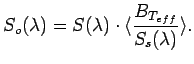
) is represented as,
 is the spectrum of the object,
 is the atmospheric transmittance, and
 is the effective instrumental response including the diffraction efficiencies of gratings and transmittance of optics.
In order to extract the spectrum of the object,
and
must be corrected.
is the effective instrumental response including the diffraction efficiencies of gratings and transmittance of optics.
In order to extract the spectrum of the object,
and
must be corrected.
The observed spectrum of a standard star (
 ) is represented as,
 is the spectrum of the standard star.
The spectrum of the standard star is obtained at the same airmass as the objects.
Thus one can assume that
is the spectrum of the standard star.
The spectrum of the standard star is obtained at the same airmass as the objects.
Thus one can assume that
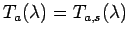 and
and
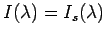 .
.
A-type stars are usually used as standards because they show almost featureless infrared spectra except for hydrogen absorption lines.
One can thus assume that the continuum spectra of standard stars can be represented by a black-body spectra
 after correcting the features of hydrogen absorption lines.
Thus one can obtain the product of
and
after correcting the features of hydrogen absorption lines.
Thus one can obtain the product of
and
 from normalized
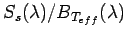 .
.
The spectrum of an object can then be obtained from the following relation
The details of the procedure are explained below.