


 and
and 
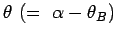 for R2.00 and R2.75 echelles, respectively.
The blaze peak efficiency decreases with
for R2.00 and R2.75 echelles, respectively.
The blaze peak efficiency decreases with
 with increasing
  .
These results confirm the results of Schroeder (1981) and prediction of Bottema (1981).
The decrease of the blaze peak efficiency with is explained as follows.
The effective width of a groove gets smaller with increasing , so that the blaze function gets broader.
Thus the interference maxima for
.
These results confirm the results of Schroeder (1981) and prediction of Bottema (1981).
The decrease of the blaze peak efficiency with is explained as follows.
The effective width of a groove gets smaller with increasing , so that the blaze function gets broader.
Thus the interference maxima for
 are located inside the main diffraction envelope as shown in Figure 9.
The integrated intensities for
and
are located inside the main diffraction envelope as shown in Figure 9.
The integrated intensities for
and  are shown in Figures 12 and 13 for
  0, 2 - 6.
As seen in Figure 12 and 13, the integrated intensities for the
orders increase significantly with increasing .
As a result, the blaze peak efficiency decreases with increasing (Figures 10 and 11).
0, 2 - 6.
As seen in Figure 12 and 13, the integrated intensities for the
orders increase significantly with increasing .
As a result, the blaze peak efficiency decreases with increasing (Figures 10 and 11).
Figures 14 and 15 show the variation of the blaze peak efficiency with . The efficiency varies only a few percent with .
In Figures 10 and 11, several dips exist on the curves with their location changing with the spectral order. In Figures 14 and 15, the blaze peak efficiencies vary with spectral orders. These are related to Wood's anomallies, which are discussed in the following subsection.
![\begin{figure}
\lq
\begin{center}
\includegraphics[width=4in]{multi_woodR200.eps}
\end{center}
\end{figure}](img178.png) |


 ) for an R2.00 echelle.
![\begin{figure}
\lq
\begin{center}
\includegraphics[width=4in]{R200theta1.eps}
\end{center}
\end{figure}](img161.png)
 .
.![\begin{figure}
\lq
\begin{center}
\includegraphics[width=4in]{R275theta1.eps}
\end{center}
\end{figure}](img163.png)
 for the R2.00 echelle when
  .
.  is the integrated intensity of the sub-order
  :
:
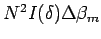 .
.  is the integrated intensity at the main peak(
 ):
):
 .
.  (red):
 ,
,  (green):
 ,
,  (blue):
 ,
,  (pink):
 .
.![\begin{figure}
\lq
\begin{center}
\includegraphics[width=4in]{multi_woodR275.eps}
\end{center}
\end{figure}](img179.png)
![\begin{figure}
\lq
\begin{center}
\includegraphics[width=4in]{R200_eff_gm.eps}
\end{center}
\end{figure}](img180.png)
![\begin{figure}
\lq
\begin{center}
\includegraphics[width=4in]{R275_eff_gm.eps}
\end{center}
\end{figure}](img181.png)